
Statement from Åge Hammeken Danielsen on NAMMCO recommendation
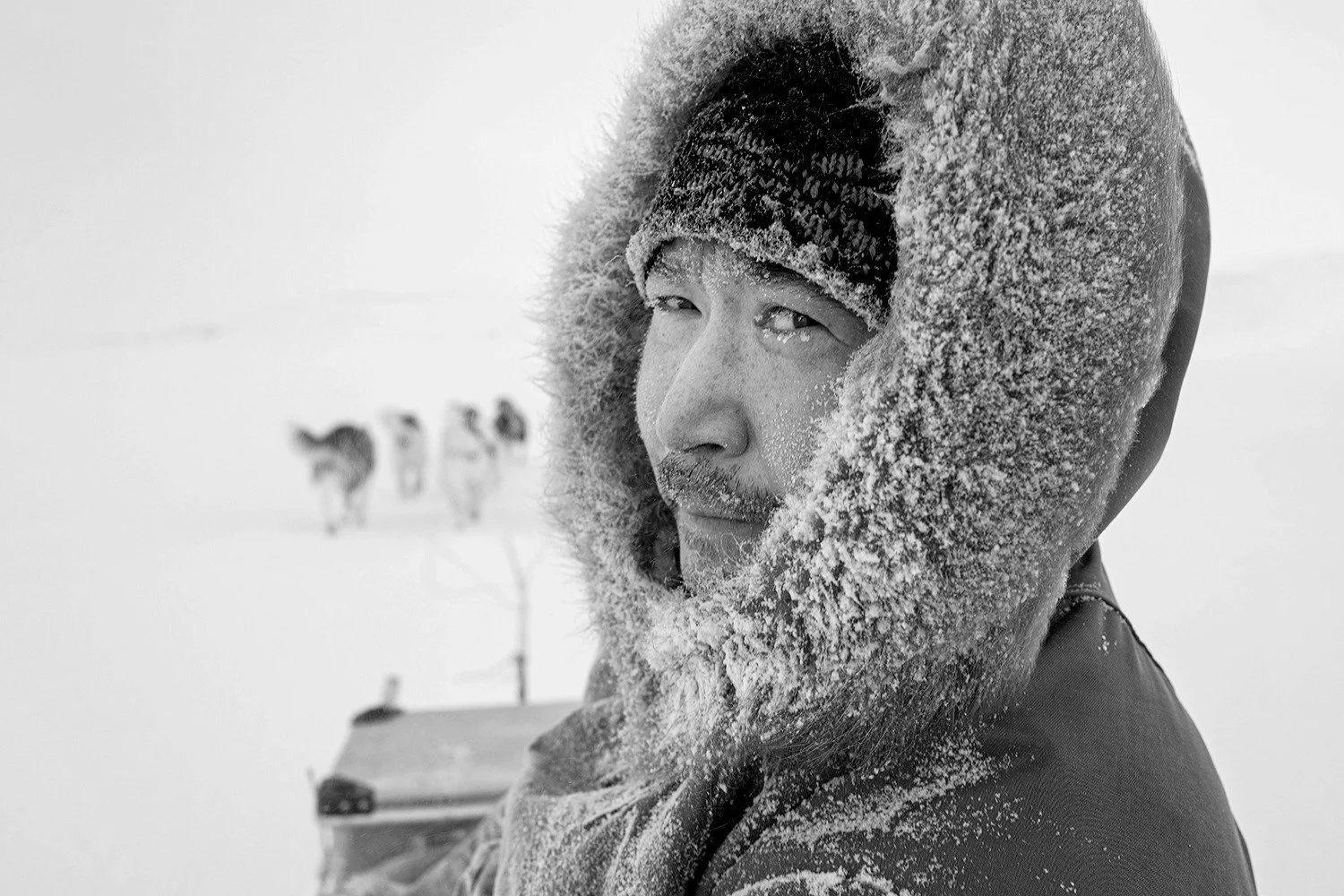
Portrait of Åge Hammeken Danielsen by long term collaborator, scientist and photographer Carsten Egevang
My stomach turned a couple days ago. During the easter holiday, a very festive time in Greenland, there was a publication from a conservation organization recommending something that sounds good to the general public but absolutely devastating for the people that live there. I gave a talk today to a group of Stanford alumni that have interest the climate action forum and preached that we have to consider who we take conservation recommendations from. Scientists with their western knowledge and PhD fieldwork that fly in for a week or two a year or the people who have coexisted with these animals for thousands of years? People whose worldview respects and recognizes how the soul is immortal and cycles through mortal bodies (e.g. human - dog - raven - grass - trout - bear - ringed seal - human). Hunting is facilitating the return of the soul.
Anyone that has been to Ittoqqortoormiit will know that you cannot survive in remote Greenland without access to nutrients. Vitamin c is one of the primary nutrients that you can’t get from other sources in the far north of Greenland and, surprisingly, mattak (whale skin and blubber) contains enough to sustain human life. Even though it’s kind of like chewing a tire if you don’t prepare it properly, people cannot live in the remote parts of Greenland if hunting is restricted by outsiders that have access to supplements and supermarkets.
The government of Greenland has been supportive of hunters as much as they can. But the quotas are too low. Last year, the quota was exhausted in my hometown one Ittoqqortoormiit in one day.
Don’t take it from me, here is the leader of the hunter’s association in Ittoqqortoormiit, Åge Hammeken Danielsen on Facebook today (7 April 2026)
NAMMCO's recommendation is one that cannot be accepted, because NAMMCO's biological knowledge is still far too insufficient regarding the exact number of narwhals in our land along the Northeast Greenland coast. A proper count has never been carried out. Having personally observed the narwhals gathering at their resting places — with aerial surveys conducted only twice, counting from above — and with no confirmed narwhal sightings from those surveys, the entire Northeast coast is nonetheless narwhal habitat. Using their feeding fish as indicators, using vessels, and using fjords as reference points, they stop and rest in every resting place and everywhere throughout the area. If we travel through the areas near where narwhals have previously been seen, following the same routes — why is it that we consistently observe large numbers of narwhals? Moving from one place to another, we continue to confirm many more. Traveling along the entire Northeast coast, just how many narwhals must there be?
In particular, we — the hunters of Ittoqqortoormiit — state with certainty that narwhal quotas are not necessary, because narwhals are present and future generations will continue to have access to them.
Therefore, I believe that regarding NAMMCO's recommendation to prohibit narwhal hunting in our land in the East, the government must pay particular and serious attention to this: that NAMMCO's hunting recommendation must be set aside.
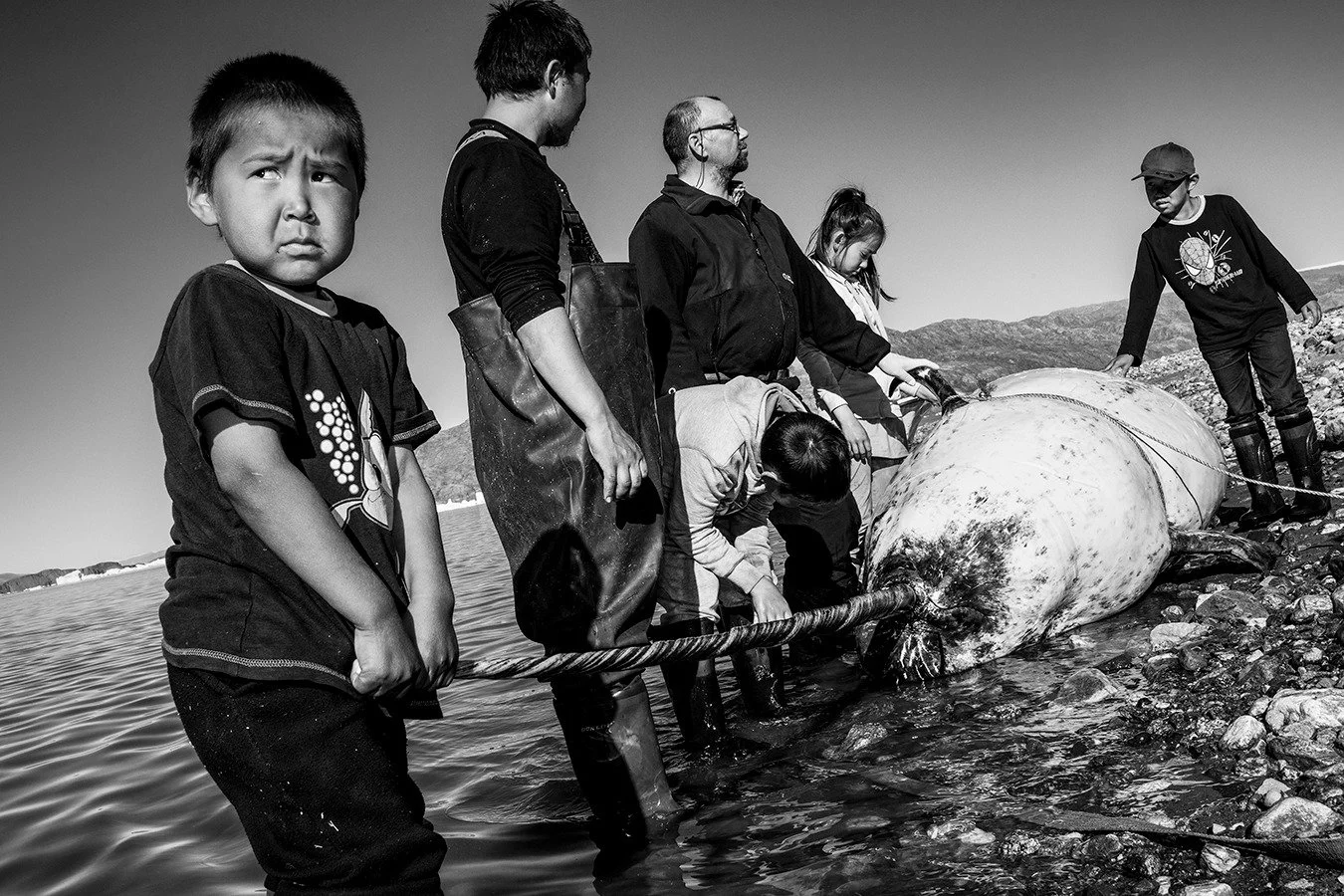
Another masterpiece by Carsten Egevang showing that whale hunting is a community tradition that kids take part in.